PIFRA Position Code – Complete Guide for Government Employees (2026)
Understanding different employee codes is important when dealing with government payroll and financial records. One term that often creates confusion among employees is the PIFRA Position Code. Many employees mistakenly believe it is the same as their Personal Number or Employee ID, but these are separate identifiers used for different administrative purposes.
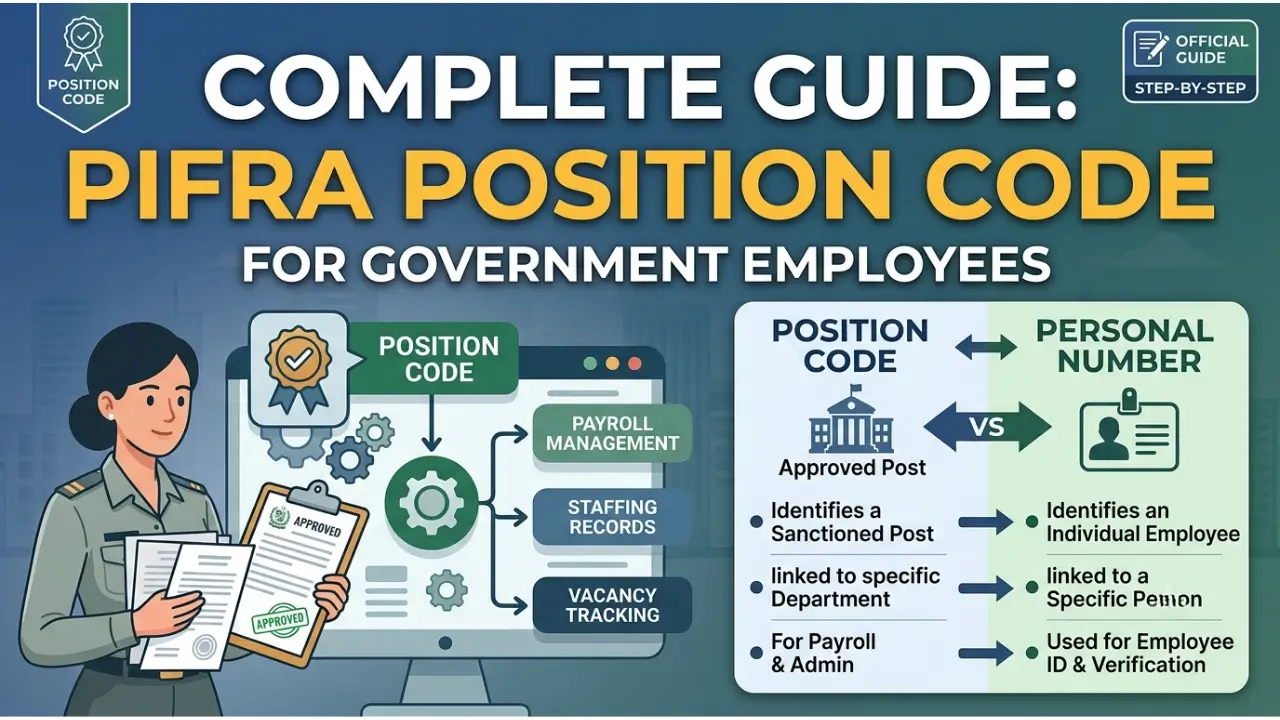
A Position Code is generally associated with a sanctioned government post rather than the individual employee. It helps government departments organize positions, manage payroll records, monitor vacancies, and maintain accurate financial reporting. Knowing where the Position Code is used can make registration, payroll verification, and departmental administration much easier.
This guide explains what the Position Code is, why it matters, who uses it, and how it differs from other employee identifiers used within government departments.
Quick Overview
| Information | Details |
| Name | PIFRA Position Code |
| Purpose | Identifies an approved government position |
| Used By | Government Departments & Accounts Offices |
| Linked With | Payroll and Position Management |
| Same as Personal Number? | No |
| Required for Every Employee? | Depends on departmental procedures |
What is a PIFRA Position Code?
A PIFRA Position Code is a unique reference assigned to an approved government position within a department. Instead of identifying an employee, it identifies the post or position officially created within the government’s organizational structure.
For example, if a department creates a sanctioned position for an Assistant Director, that position may have its own Position Code. When an employee is appointed to that post, the employee occupies the position, but the Position Code itself remains associated with the approved post rather than the individual.
This system helps departments manage staffing, payroll allocation, budget planning, and human resource records more efficiently.
You Can Also Visit: PIFRA Pay Slip – Complete Guide
Why is the Position Code Important?
Position Codes play an important role in government administration because they help maintain organized payroll and staffing records across departments.
Some key purposes include:
- Identifying sanctioned government posts.
- Supporting payroll management.
- Improving budget allocation.
- Tracking filled and vacant positions.
- Assisting human resource management.
- Simplifying financial reporting.
- Maintaining accurate organizational records.
Because every approved position belongs to a specific department and pay structure, Position Codes help prevent confusion during employee appointments and transfers.
Who Uses the Position Code?
Although government employees may occasionally see Position Codes in official records, they are mainly used by departments responsible for payroll, budgeting, and employee administration.
Common users include:
- Accounts Offices
- Human Resource Departments
- Drawing and Disbursing Officers (DDOs)
- Finance Officers
- Treasury Offices
- Payroll Administrators
- Government Audit Teams
These offices use Position Codes to ensure that salaries are linked to approved government posts and budget allocations.
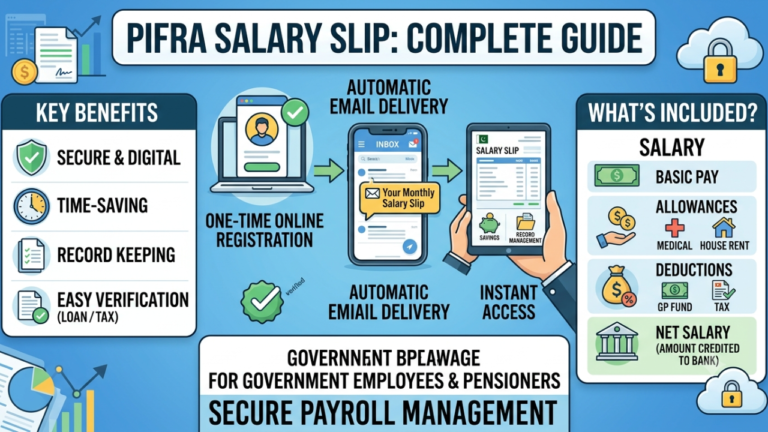
You Can Also Visit: PIFRA Salary Slip 2026 – Complete Guide
Difference Between Position Code and Personal Number
One of the biggest misconceptions is that a Position Code and a Personal Number are identical. In reality, they serve completely different purposes.
| Position Code | Personal Number |
| Identifies a government post | Identifies an individual employee |
| Remains linked to the sanctioned position | Remains linked to the employee throughout service |
| Used for staffing and payroll management | Used for employee identification |
| May remain unchanged even if the employee changes | Changes only if official employee records require it |
| Used mainly by departments | Used during employee registration and payroll verification |
Understanding this difference helps employees complete registration forms correctly and avoid entering the wrong information during payroll-related processes.
Where Can You Find Your Position Code?
Employees do not usually need their Position Code for routine salary slip registration. However, it may appear in certain departmental records or administrative documents.
Depending on your department, the Position Code may be available through:
- Official appointment or posting orders.
- Human Resource records.
- Departmental establishment branch.
- Payroll management records.
- Accounts Office documentation.
- Finance or administration section.
If you are unsure whether your department uses Position Codes, contact your HR or Accounts Office instead of guessing the information.
Common Position Code Categories
Government departments may classify Position Codes according to organizational structure, employee grade, or administrative function. The exact format varies between departments.
Some common categories include:
| Category | Description |
| Administrative Positions | Office management and administration |
| Teaching Positions | Government schools and educational institutions |
| Health Positions | Hospitals and health departments |
| Police Positions | Law enforcement departments |
| Engineering Positions | Technical and engineering services |
| Finance Positions | Accounts, audit, and treasury offices |
| Clerical Positions | Ministerial and office support staff |
These categories help departments manage approved posts while ensuring payroll and staffing records remain properly organized.
Expert Tip: If you are completing a registration form or updating payroll information, never assume your Position Code and Personal Number are the same. Always verify the required information with your department’s HR or Accounts Office to avoid processing delays or payroll verification issues.
You Can Also Visit: PIFRA DDO BER – Complete Budget Expenditure Report
How is the PIFRA Position Code Used?
Although most government employees do not use the PIFRA Position Code daily, it plays an important role behind the scenes in payroll and human resource management. Government departments use this code to ensure that every employee is assigned to an approved position with an authorized budget.
The Position Code is commonly used for:
- Employee appointments.
- Payroll processing.
- Budget allocation.
- Departmental transfers.
- Vacancy management.
- Financial reporting.
- Establishment and HR records.
By assigning employees to sanctioned positions, departments can maintain accurate staffing records and improve financial planning.
Is the Position Code Required for PIFRA Registration?
In most cases, employees do not need to enter a Position Code while registering for electronic salary slip services. Registration usually requires details such as your Personal Number, Government Code, CNIC, Date of Birth, and Email Address.
However, some departments may use Position Codes internally during employee verification or payroll administration. If your office specifically requests a Position Code, obtain it from your HR or Accounts Office rather than entering incorrect information.
You Can Also Visit: PIFRA Registration Form – Complete Online Registration
Common Problems Related to Position Codes
Employees occasionally face questions about Position Codes, especially during transfers, promotions, or payroll updates. Most issues occur because Position Codes are confused with employee identification numbers.
| Common Issue | Solution |
| Unable to find the Position Code | Contact your HR or Establishment Branch. |
| Confusing Position Code with Personal Number | Check your official employee records carefully. |
| Incorrect Position Code in departmental records | Report the issue to your Accounts or HR Office. |
| Position changed after promotion | Confirm whether a new sanctioned position has been assigned. |
| Payroll verification delay | Verify all employee records before requesting corrections. |
Keeping your employment records updated helps avoid unnecessary delays in payroll processing.
Best Practices for Government Employees
Although Position Codes are mainly handled by departments, employees should still understand their purpose and maintain accurate employment records.
Some useful recommendations include:
- Keep copies of your appointment and transfer orders.
- Verify your employee information after promotions or transfers.
- Report payroll discrepancies immediately.
- Never guess your Position Code during official procedures.
- Contact your Accounts Office whenever clarification is required.
- Keep your salary records and service documents organized.
Following these practices can reduce administrative issues and simplify future payroll verification.
Security and Record Management
Position Codes form part of official government administrative records. While they are not confidential in the same way as passwords, they should only be used for official government purposes.
Employees should:
- Share employment information only with authorized officials.
- Avoid submitting employee details on unofficial websites.
- Protect personal payroll records.
- Verify official documents before providing employee information.
- Store appointment and service records securely.
Good record management helps maintain accurate payroll information throughout your government service.
You Can Also Visit:
Latest 2026 Updates
Government departments continue improving digital payroll and human resource management systems to enhance efficiency and record accuracy. Position management has become more organized through centralized financial and administrative systems, helping departments maintain approved staffing structures and monitor budget utilization more effectively.
Employees should always rely on official departmental notifications regarding any changes to payroll records, employee information, or administrative procedures.
Frequently Asked Questions
What is a PIFRA Position Code?
A PIFRA Position Code is a unique identifier assigned to an approved government post for payroll, staffing, and administrative purposes.
Is the Position Code the same as a Personal Number?
No. A Position Code identifies a sanctioned government position, while a Personal Number identifies an individual employee.
Where can I find my Position Code?
It may be available through your Human Resource department, Accounts Office, Establishment Branch, appointment order, or other official service records.
Is the Position Code required for salary slip registration?
Generally, no. Most employees only need their Government Code, Personal Number, CNIC, Date of Birth, and Email Address for registration.
Can two employees have the same Position Code?
Normally, a Position Code represents a specific sanctioned post. Different employees may occupy that position over time, but only one employee is assigned to the position at a given time unless departmental rules specify otherwise.
Why is the Position Code important?
It helps government departments manage payroll, staffing, budget allocation, employee transfers, and organizational records more efficiently.
What should I do if my Position Code is incorrect?
Contact your HR or Accounts Office and request verification using your official service records.
Does every government employee use a Position Code?
Many departments maintain Position Codes internally, but employees may not need to use them regularly unless required for administrative or payroll purposes.
Conclusion
The PIFRA Position Code is an important administrative identifier that helps government departments manage sanctioned posts, payroll records, staffing, and budget allocation. Although it is different from an employee’s Personal Number, understanding its purpose can help employees avoid confusion during payroll verification, transfers, and other official procedures.
If you are ever asked to provide your Position Code, always obtain the information from your Human Resource or Accounts Office instead of relying on unofficial sources. Keeping your employment records accurate and up to date will help ensure smooth payroll processing and efficient administrative management throughout your government service.