PIFRA Bill Tracking – Complete Guide (2026)
Government departments process thousands of payment bills every month for salaries, pensions, suppliers, contractors, reimbursements, and development projects. Monitoring the progress of these payments is essential to ensure transparency and avoid unnecessary delays. PIFRA Bill Tracking helps authorized users monitor the status of government bills during different stages of financial processing.
Instead of repeatedly contacting Accounts Offices or Treasury departments, bill tracking allows users to determine whether a bill has been received, verified, approved, processed, or paid. This improves efficiency and helps departments manage financial transactions more effectively.
This guide explains what PIFRA Bill Tracking is, who can use it, how it works, and what information is typically required to check the status of a government bill.
Quick Overview
| Information | Details |
| Service | PIFRA Bill Tracking |
| Purpose | Track the status of government payment bills |
| Used By | Government Departments, DDOs, Vendors & Accounts Offices |
| Fee | Free |
| Information Required | Bill Reference or Related Details |
| Payment Types | Salary, Pension, Vendor, Contractor & Other Government Bills |
What is PIFRA Bill Tracking?
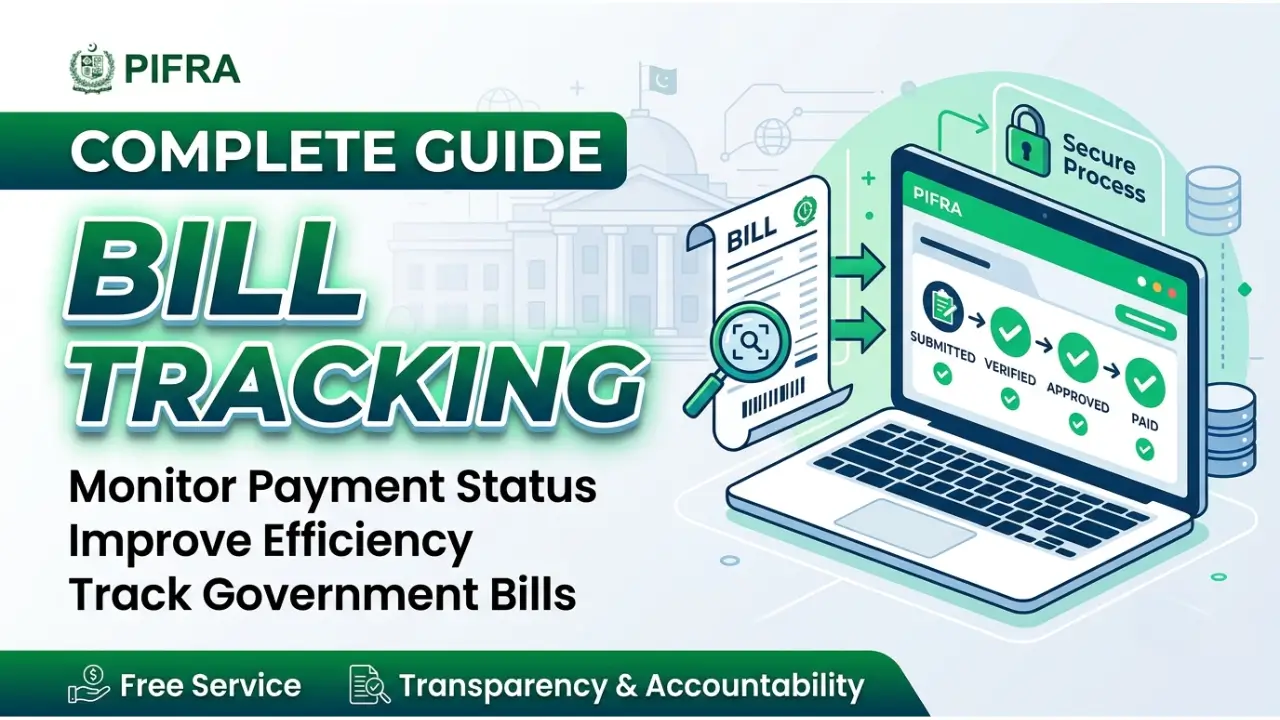
PIFRA Bill Tracking is a facility that helps authorized users monitor the progress of government payment bills submitted through the financial management system. Instead of waiting for manual updates, departments can follow the movement of a bill from submission to final payment.
The tracking process improves transparency because each stage of bill processing is recorded within the financial system. This helps departments identify pending approvals, incomplete documentation, or payment delays without relying entirely on manual communication.
Whether the payment relates to employee salaries, pensions, supplier invoices, or contractor bills, tracking helps ensure that financial transactions move through the approval process efficiently.
You Can Also Visit: PIFRA Vendor Number – Complete Guide
Why is Bill Tracking Important?
Government payment processing involves multiple verification stages before funds are released. Bill tracking helps departments monitor these stages and resolve issues quickly.
Some of the major benefits include:
- Better transparency during bill processing.
- Faster identification of pending approvals.
- Reduced payment delays.
- Improved financial monitoring.
- Easier coordination between departments.
- Better accountability throughout the payment cycle.
- More accurate financial record management.
For finance officers and Drawing and Disbursing Officers (DDOs), tracking also supports better budget control and payment planning.
Who Can Use PIFRA Bill Tracking?
Bill tracking is generally intended for authorized government users involved in financial management and payment processing.
Common users include:
- Drawing and Disbursing Officers (DDOs)
- Accounts Offices
- Treasury Offices
- Finance Departments
- Government Suppliers
- Registered Contractors
- Government Institutions
- Authorized Administrative Officers
Individual employees may also receive updates regarding salary-related bills through their respective departments, depending on internal procedures.
You Can Also Visit: PIFRA Position Code – Complete Guide
What data is required for Bill Tracking?
The exact information required depends on the department and type of payment being tracked. Having accurate bill information helps locate records more quickly.
Common details include:
| Required Information | Purpose |
| Bill Number | Identifies the submitted bill |
| DDO Code | Identifies the concerned department |
| Vendor Number (if applicable) | Links vendor payment records |
| Financial Year | Filters payment records |
| Department Name | Identifies the organization |
| Payment Category | Salary, Pension, Vendor, or Other Bills |
Providing accurate information improves the chances of locating the correct bill status without unnecessary delays.
Types of Bills That Can Be Tracked
Government departments process different categories of financial claims. Bill tracking supports the monitoring of various approved payment types.
Some common examples include:
- Salary Bills
- Pension Bills
- Medical Reimbursement Bills
- Utility Payment Bills
- Vendor Payment Bills
- Contractor Bills
- Office Expenditure Bills
- Development Project Bills
Each bill follows its own approval workflow depending on the nature of the expenditure and departmental requirements.
You Can Also Visit: PIFRA Pay Slip – Complete Guide
How the Bill Tracking Process Works
Although the workflow may differ slightly between departments, most government payment bills follow a similar process before payment is released.
The general process includes:
- Bill preparation by the department.
- Submission to the relevant Accounts Office.
- Verification of supporting documents.
- Financial approval.
- Treasury processing.
- Payment authorization.
- Payment released to the beneficiary.
Tracking helps authorized users determine exactly which stage the bill has reached and whether any action is still required.
Expert Tip: Before following up on a delayed payment, verify that the Bill Number, DDO Code, and supporting documents are correct. Many payment delays occur because of incomplete documentation or incorrect bill information rather than issues with the financial system itself.
How to Track a Government Bill
Once a government bill has been submitted for processing, authorized users can monitor its progress through the relevant financial management system or by contacting the concerned Accounts Office. Tracking helps determine whether the bill is under review, approved, or ready for payment.
The general process is:
- Keep the Bill Number or reference details ready.
- Verify the DDO Code or department information.
- Access the relevant bill tracking facility (if available).
- Enter the required bill details.
- Review the current processing status.
- Contact the Accounts Office if additional verification is required.
Using accurate bill information reduces the chances of incorrect search results.
You Can Also Visit: PIFRA Salary Slip 2026 – Complete Guide
Understanding Bill Status
Every government bill passes through multiple stages before payment is released. Knowing what each status means helps departments identify where a bill is currently being processed.
| Bill Status | Meaning |
| Submitted | The bill has been submitted for processing. |
| Under Verification | Supporting documents are being reviewed. |
| Pending Approval | Waiting for approval from the authorized officer. |
| Approved | Financial approval has been completed. |
| Sent to Treasury | The bill has been forwarded for payment processing. |
| Payment Released | Payment has been approved and processed. |
| Returned | The bill requires correction or additional documents. |
If a bill remains at one stage for an unusually long period, the concerned department should verify whether additional documentation or clarification is required.
Common Bill Tracking Problems and Solutions
Occasionally, departments or vendors may face issues while checking the status of a government bill. Most problems are related to incomplete information or processing delays.
| Problem | Solution |
| Bill not found | Verify the Bill Number and DDO Code. |
| Incorrect bill details | Review the submitted information before tracking again. |
| Bill pending for a long time | Contact the Accounts Office for an update. |
| Returned bill | Correct the required information and resubmit the bill. |
| Payment not received after approval | Confirm payment processing with the Treasury or Finance Office. |
Maintaining complete and accurate documentation helps prevent many common processing delays.
You Can Also Visit: PIFRA DDO BER – Complete Budget
Benefits of Using Bill Tracking
Bill tracking improves transparency and allows departments to manage financial transactions more efficiently.
Some of the key benefits include:
- Real-time visibility into bill processing.
- Faster identification of pending approvals.
- Improved communication between departments.
- Better financial planning and budget monitoring.
- Reduced administrative workload.
- Accurate record management.
- Greater accountability during payment processing.
For suppliers and contractors, bill tracking also provides better visibility into the payment cycle without making repeated inquiries.
Security and Best Practices
Government financial records should always be handled carefully. Only authorized personnel should access bill information or payment records.
To protect financial data:
- Use official government systems whenever available.
- Verify bill details before submission.
- Keep copies of approved bills and supporting documents.
- Do not share confidential financial information with unauthorized individuals.
- Maintain secure records of payment references and departmental correspondence.
- Report any discrepancies to the relevant Accounts or Finance Office immediately.
Good record management reduces administrative errors and supports smoother financial operations.
Latest 2026 Updates
Government financial systems continue to improve through better digital record management and streamlined payment workflows. Recent developments focus on improving bill processing efficiency, enhancing financial transparency, and reducing delays in payment verification.
Departments should continue following official financial procedures and rely on government notifications for any updates related to bill submission, tracking, or payment processing.
You Can Also Visit: PIFRA Registration Form – Complete Online
Frequently Asked Questions
What is PIFRA Bill Tracking?
PIFRA Bill Tracking is a process that allows authorized users to monitor the progress of government payment bills from submission to final payment.
Who can use bill tracking?
Drawing and Disbursing Officers (DDOs), Accounts Offices, Finance Departments, Treasury Offices, government suppliers, contractors, and other authorized personnel.
What information is required to track a bill?
You may need details such as the Bill Number, DDO Code, Department Name, Financial Year, or Vendor Number, depending on the type of payment.
Can every government employee track bills?
No. Access generally depends on departmental responsibilities and authorization levels.
Why is my bill still pending?
A bill may remain pending because it is awaiting verification, approval, treasury processing, or additional supporting documents.
What should I do if my bill is returned?
Review the reason for the return, correct the required information or documents, and resubmit the bill through the proper departmental procedure.
Does bill approval mean payment has been released?
Not always. After approval, the bill may still need to complete treasury processing before payment is issued.
Is PIFRA Bill Tracking free?
Yes. Government departments use the bill tracking process as part of official financial management procedures.
Conclusion
PIFRA Bill Tracking plays an important role in improving transparency, accountability, and efficiency within Pakistan’s government financial management system. By allowing authorized departments, vendors, and finance officials to monitor the progress of payment bills, it helps reduce delays, improve communication, and ensure that financial transactions move smoothly through each stage of processing.
Keeping accurate bill information, verifying departmental records, and following official procedures can significantly improve the payment process. Whether you are tracking a salary bill, vendor invoice, pension payment, or development expenditure, understanding the bill tracking workflow helps ensure faster resolution of issues and better financial record management.